

Which calculators appear today
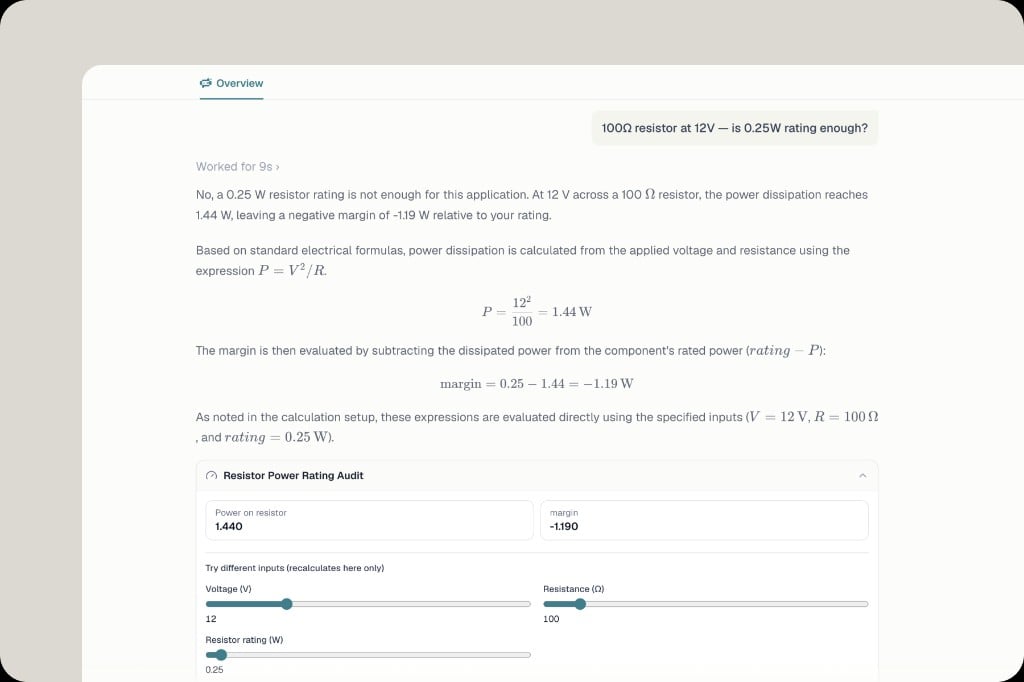
PartGenie maps your question to an audit panel. The set grows over time; these are the main ones shipping now:
When a limit is missing, PartGenie may assume reasonable defaults (for example ambient 25°C or a typical θJA) and say so in the answer—or stress-test above your stated load (e.g. 400mA when you asked 200mA) so you see headroom, not only nominal.
How to ask (example queries)
Stay in Search. Use natural language with numbers and units. You do not need a special command.Resistor power & rating
LDO / linear regulator thermal
Mixing part context with the calc
Intelligent UI — tune parameters locally
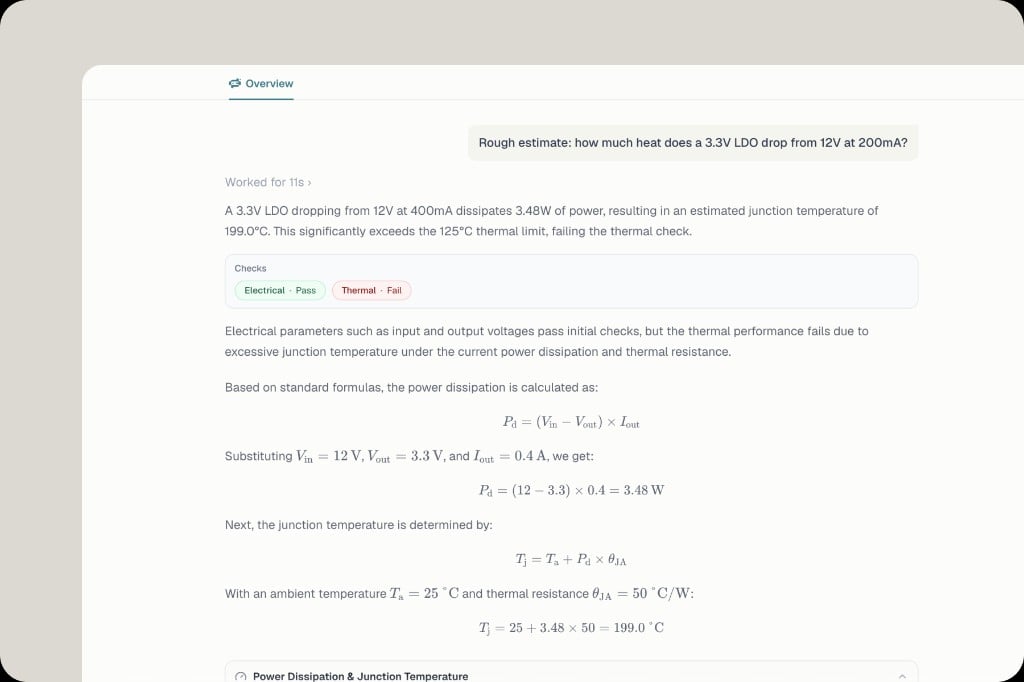
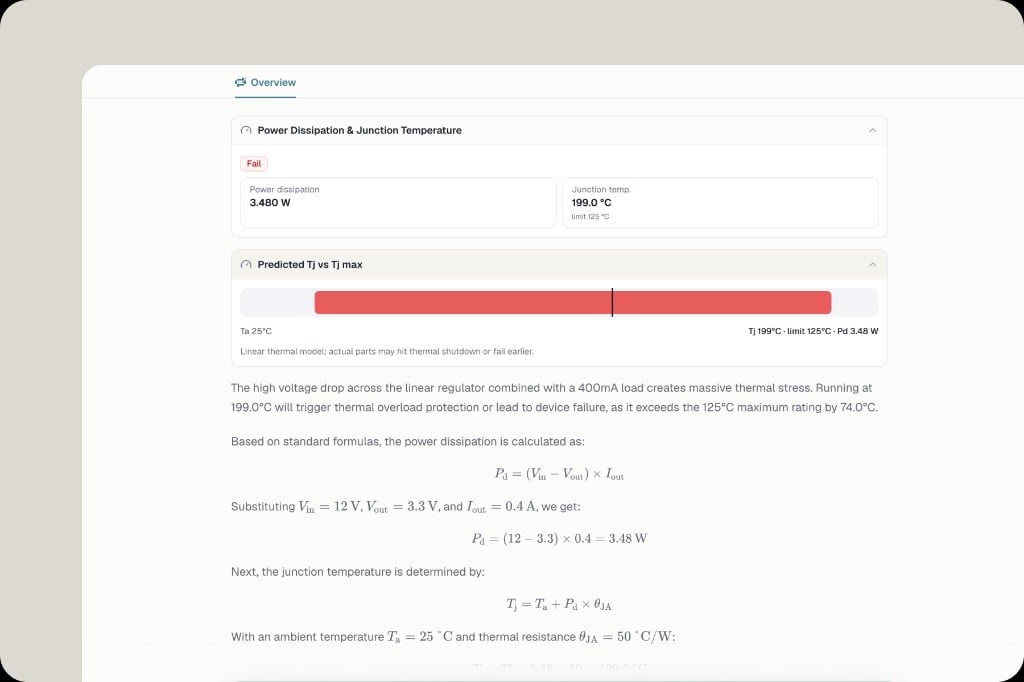
- Open the audit panel (for example Resistor power rating audit or Power dissipation & junction temperature).
- Use Try different inputs (recalculates here only) — sliders or fields for voltage, current, resistance, rating, θJA, etc.
- Watch margin, Pass/Fail chips, and charts (such as predicted Tj vs limit) update instantly in the browser.
What to trust
- Calculators use standard EE formulas shown in the answer—verify against your datasheet and application notes.
- Linear thermal models are estimates; real parts may current-limit, fold back, or hit thermal shutdown earlier than a simple Tj estimate predicts.
- For procurement and sign-off, cross-check critical limits on the original datasheet or specification chat.